

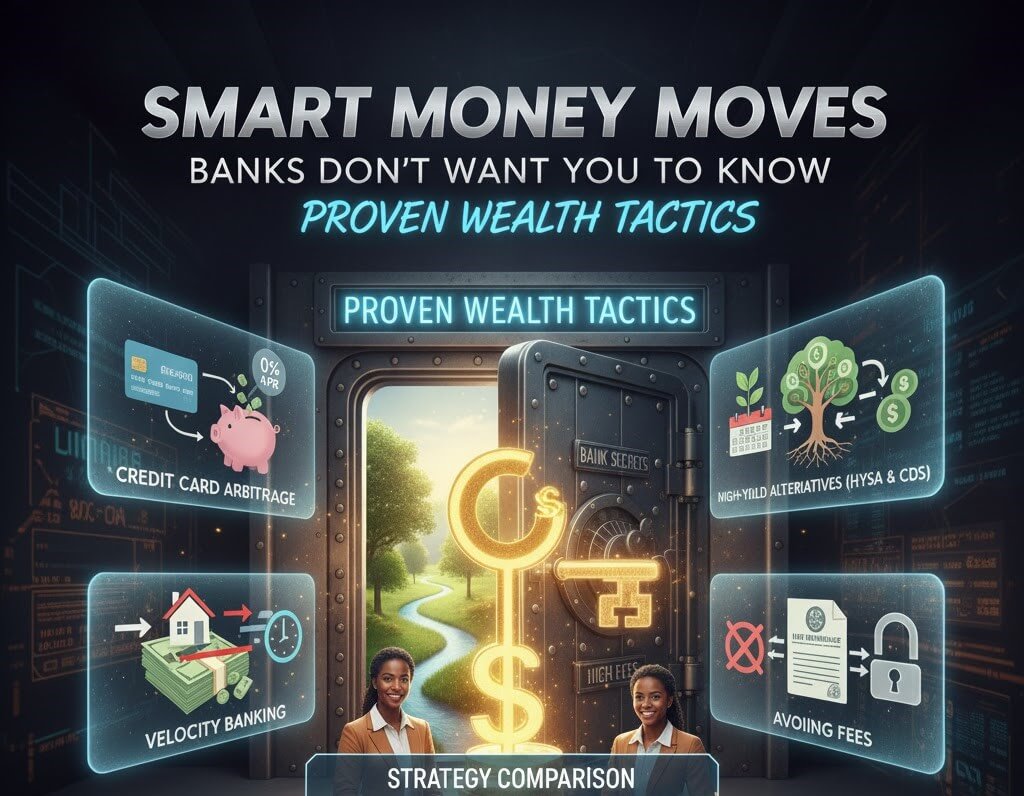
Smart Money Moves Banks Do NOT Want You to Know.
Let’s be honest. Banks are not bad–but they are not your financial advisor either. Within their business model, it pays well to borrow more, save less and remain safely lost. That is why knowing how to move smart money without attracting the attention of banks you do not want to be is everything. The first few shifts and you no longer play defense but you begin to create control, clarity, and confidence.
This manual is informative in nature. You have come to the Smart Money to see how it really works behind the scenes–and how to get it to work on you.
Measuring the Real Search Intent
Individuals who look up this subject want to find practical strategies that can be put into use. Not theory. Not jargon. They desire insider type of financial practices that would limit their reliance on banks and maximize their wealth. That’s exactly what follows.
The reason why Banks make money When You remain ignorant.
There are three primary ways that banks make Smart Money: interest, fees and inertia. When customers accept the rates without questioning, bargaining and not moving Smart Money strategically, the profits run high without loud announcement.
Over latest post:What Lenders Look for Before Approving a Loan: 17 Proven Factors That Decide Approval

The way the Banking System Really Makes Smart Money
The Spread of interest In simple terms
Banks borrow at low rates and lend at high rates. Your savings earn 0.5%. Loans earn them 7-25%. That gap is the spread.
Charges: The Silent Wealth Killer
Monthly maintenance charges, foreign currency transaction charges. Individually small. Collectively massive.
Data Monetization You Never Know
The way you spend is information. Offers, approvals and marketing pressure are being affected by data.
The Secret Money Moves Banks Would Rather You not Know
Pay Yourself First (Before the Bank Does)
Prebills savings are to be automated. Not after. This flips the script. Walthy is acquired by default and not design.
Internal suggestion of the link: Go to a guide on automated savings systems.
Image placeholder: Diagram of automation of the income split.
High-Yield Savings vs Classic Savings
Having emergency funds in low-interest accounts silently drains the cash in through inflation. Savings with high interest safeguard buying capacity.
Savings account interest comparison chart with high yield Savings account interest comparison chart high-yield
Over latest post:Common Loan Mistakes That Cost Borrowers Thousands: 17 Shocking Errors to Avoid

Automate Wealth, Not Bills only
Automation is not limited to rent and utilities. Automate investments and sinking funds and debt payoff.
Best Practices in Automation
- Weekly micro-transfers
- Percentage-based automation
- Bonds with individual objectives.
Common Automation Mistakes
- Against being overly aggressive with automation.
- Losing track of quarterly reviewing.
Debt Moves That Reverse the Power Relationship
The Trap of Carrying a Balance
Minimum payments are created to give as much interest as possible, but not to get you finished sooner.
How to use credit cards strategically
Credit cards are not loans but tools. When properly used, they accumulate credit and get points.
Negotiation of Interest Rates The Pro Way
Banks expect negotiation. APR might be reduced by a mere call or even fees can be waived.
Investment Moves BanksBanks seldom promote
Bank Products vs Low-Cost Index Funds
Banks prefer high-fee funds. The index funds perform silently better in the long run and have fewer fees.
The motivation behind Advisors to recommend some funds
The structure of commission is important. Under inquiry, constantly inquire about the manner of remuneration of advisors.
Over latest post:Life Insurance Term vs Whole: Which Makes Sense Financially? Smart 2026 Guide
Best Tax-Internally Advantaged Accounts To Fill First
- 401(k) match
Roth IRA
HSA - Without them, one is leaving free money on the table.
The Tactics of Cash Flow that the Rich Use Everyday
Zero-Based Budgeting Revived
Every dollar gets a job. No wandering smart money.
Multiple Account Strategy
Individual accounts on bills, spending, saving and investing minimize errors and impulse spending.
Emergency Funds Done Right
Three to six months. Liquid. Boring. Essential.
Banks Behavioral Traps Banks Bank On
Convenience Over Awareness
Auto-renewals, subscriptions, and easy financing continue to pour the Smart money out without being noticed.
Financial Decisions Filled With Fear.
Fear sells products. Calm builds wealth.
Lifestyle Inflation
Increased income does not translate into increased freedom in case spending is not a goal.
Over latest post:How High-Income Earners Reduce Taxes Legally: 17 Smart Strategies That Actually Work

E-resources Which decreases bank reliance
Fintech Applications that Outperform the traditional banks
- Budgeting apps
- Fee-free banking platforms
- Automated investing tools
Open Banking and Openness
Live data provides you with advantage and power.
The Smart Money Moves in the Real World
- By refinancing a loan, one would save thousands of dollars in interest.
- Six figures just grow using automation.
- Hundreds every year are retrieved by Fee audits.
Experience matters. Small changes compound.
Errors to Steer clear of When assuming leadership.
- Rushing off and not thinking.
- Ignoring taxes
- Optimizing rather than being consistent.
The Simple Action Plan (How to Start Today)
- Audit all fees
- Automate one smart move
- Substitute ineffective account.
- Review monthly
Momentum beats perfection.
Conclusion
Banks are not evil, they are businesses. When you see that, everything turns out. These are not tricks that these smart money moves banks do not want you to know about. They’re disciplined habits. They slip, after being applied, the power to its name: back to you.