


The Real Way Loan Approval Works.
The banks and other financial organizations have systematic risk models that they utilize when assessing the applications. These models are constructed to provide answers to a single central question: Will this borrower make repayment of loan in time and in full?
Learned information on what lenders are seeking before they approve a loan eliminates the confusion and assists loan applicants to prepare in a strategic manner. Approval isn’t random. It is founded on documented financial conduct, risk signs and foreseeability.
In the present cases, the automated underwriting systems are employed by the modern lenders with human review. Algorithms are scanned by numbers but patterns are interpreted by underwriters. Both matter.
Over latest post:Secured vs Unsecured Loans: Which One Costs You More? | 7 Powerful Cost Truths Revealed
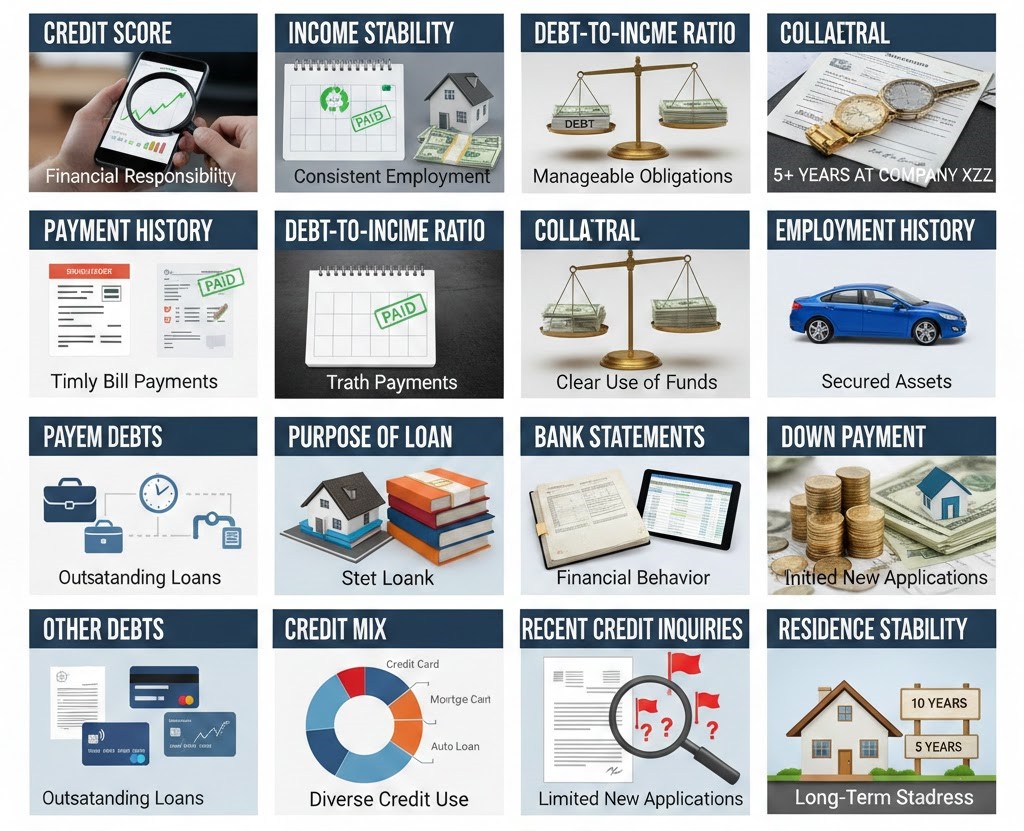
The 5 C’s of Credit Explained
The majority of lending consideration is still based upon the traditional 5 Cs of Credit model.
Character
Trustworthiness is characterized by character. Lenders review:
- Payment history
- Credit behavior over time
- Bankruptcies, collections, defaults.
Trust is built through a long history of punctual payments.
Capacity
Capacity is a measure of repayment capacity. It focuses on:
- Income vs obligations
- Debt-to-income ratio
- Monthly cash surplus
High capacity minimizes the risk of default.
Capital
Capital displays economic investment. Equity, investments or savings are an indication of stability and responsibility.
Collateral
Collateral minimizes the risk of lenders. Recoverable assets usually make secured loans to be more acceptable.
Conditions
Conditions include:
- Economic climate
- Industry trends
- Loan purpose
Approach conditions become tight about high-risk conditions.
Over latest post:Auto Insurance Explained: What Coverage Do You Actually Need? | Ultimate 2025 Guide
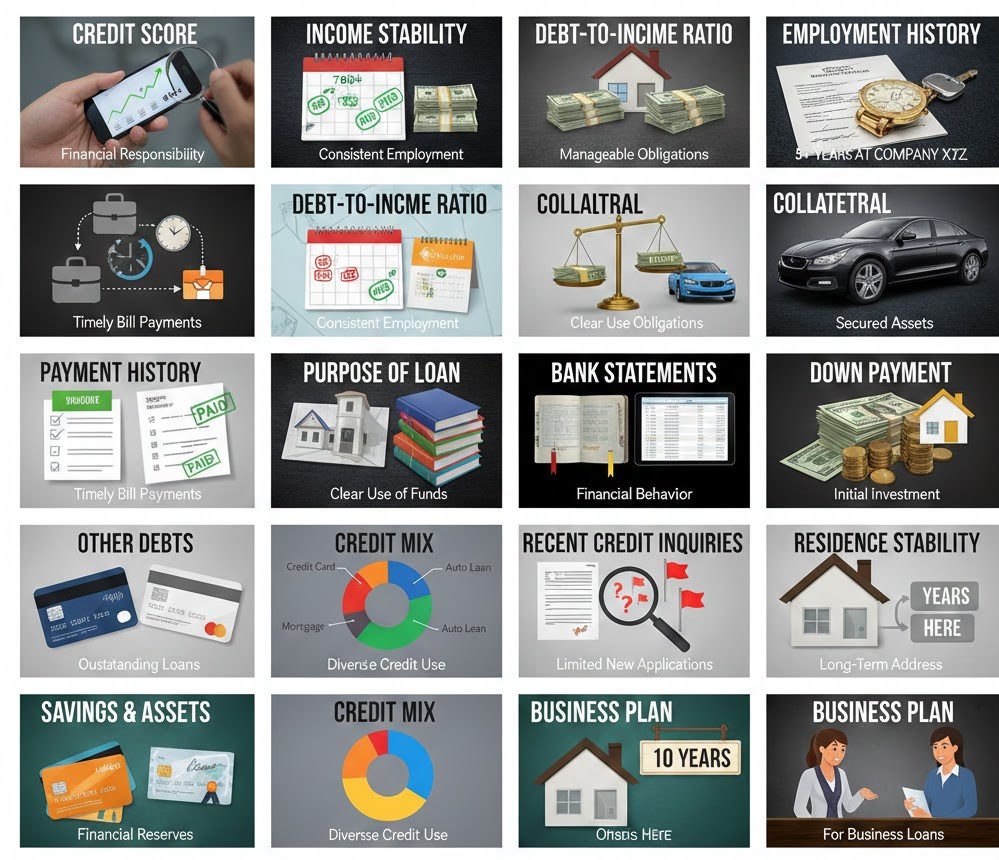
Credit History and Credit Score
One of the best indicators of loans that lenders consider before giving a loan is credit profile.
Minimum Score Requirements
- Personal loans: 600-660
- Auto loans: 620+
- Mortgages: 620-740
- Business loans: Conditional upon lender and revenue.
The better the terms are unlocked by higher scores.
Red Flags in Credit Reports
- Late payments
- Charge-offs
- High utilization
- Frequent credit inquiries
Check out review reports of all bureaus to apply. The consumer protections are found in the Consumer Financial Protection Bureau (CFPB):
Earnings and Financial Security
Lenders focus on a predictable income.
Job History
Stable work experience 2+ years makes applications solid. There is danger of frequent job hopping.
Income Consistency
Variable income (freelance, commissions) needs to be documented:
- Tax returns
- Bank deposits
- Contracts
The fact it is stable is more important than the size of raw income.
Over latest post:Credit Score vs Credit Report: What Banks Actually Check – Powerful Guide 7
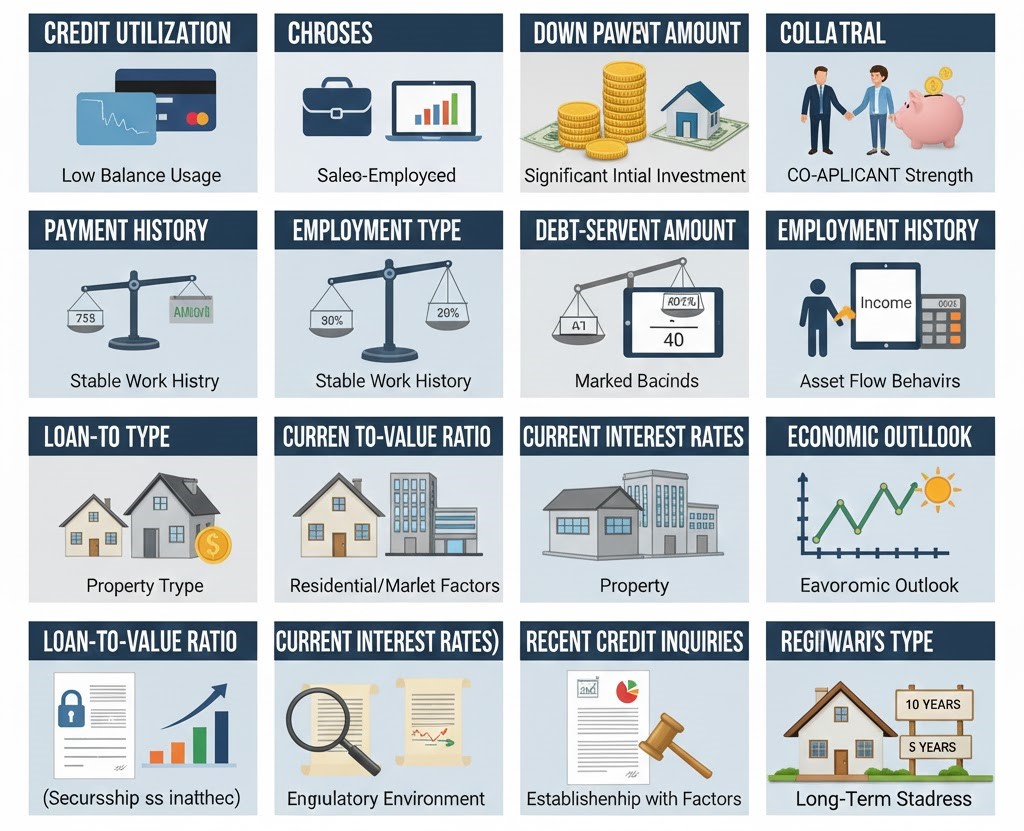
Debt-to-Income Ratio (DTI)
DTI is used to demonstrate the proportion of income spent on debt.
Formula:
Total gross monthly debt/Gross monthly income.
- General thresholds:
- Excellent: under 30%
- Acceptable: 36-43%
High risk: 50%+
Reduced DTI enhances chances of approval in the short run.
Cash Flow and Bank Statements
In addition to income, lenders also analyze the behavior of the cash flow:
- Average balances
- Overdraft history
- Spending consistency
Good positive cash flow means that there is control of finances. Loans to business people may demand 6-12 months statements.
Over latest post:How to Increase Your Credit Score Fast Legit Methods OnlyProven 9-Step System That Works
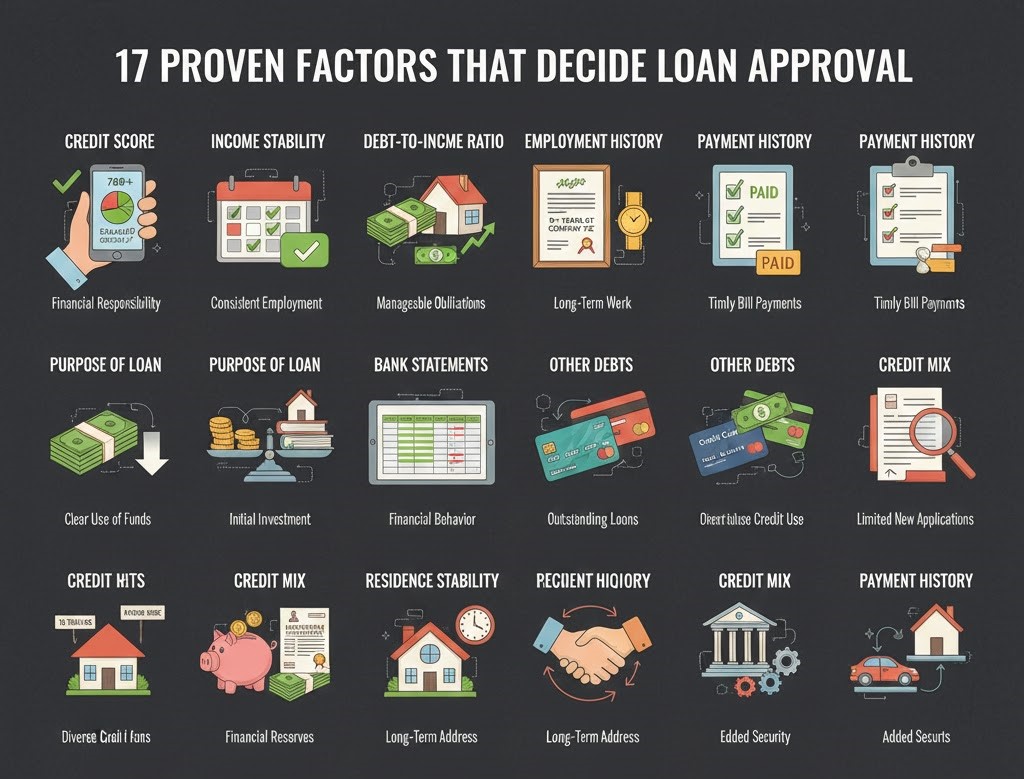
Assets and Collateral Appraisals
Assets drive down the lender exposure.
Common collateral types:
- Real estate
- Vehicles
- Equipment
- Savings accounts
Even unsecured loans take the ownership of assets as a signal of stability.
Loan Intended Use and Risk Profile
Clear loan purpose matters.
Low-risk purposes:
- Debt consolidation
- Home improvement
- Business expansion
Higher-risk purposes:
- Speculation
- Gambling-related activity
- Untrusted business enterprises.
- Openness generates confidence.
Down Payment and Skin in the Game
Borrowers who come up with their own investment are favored by the lenders.
Advantages of large down payment:
- Lower loan-to-value (LTV)
- Reduced interest rates
- Easier approval
It demonstrates responsibility and devotion.
Business vs Personal Loan Criteria
There are additional layers due to business loans.
Business lenders review:
- Revenue history
- Profit margins
- Industry stability
- Time in business
Personal credit remains to be a factor, particularly in small business.
Lender-Specific Risk Models
The two lenders have proprietary scoring mechanisms.
- Banks emphasize stability.
- Online lenders focus on the cash flow.
- Credit unions lay stress on relationships history.
The odds can be enhanced by applying in the same bank that you have.
How to Enhance Odds of Loan Approval
Actionable steps:
- Minimize use of credit to less than 30 percent.
- Together with making all bills punctual within 6 months.
- Avoid new credit inquiries
- Increase cash reserves
- Lower DTI before applying
It is a matter of preparation that alters results.
Most Frequent Reasons Loans are denied.
Most denials trace back to:
- Poor credit history
- High DTI
- Insufficient income
- Unstable employment
- Incomplete documentation
Even the correction of one of the factors can turn the decisions.
FAQs: What Lenders Check Before they Lend you a Loan.
Which is the most significant thing that lenders consider?
The most weight is normally taken up by credit history and repayment behavior.
Is it possible to be approved with bad credit?
Yes, but will demand an increased interest or security.
Is more important income or credit score?
Both matter. Good income has the power to counter balanced credit rather than crummy credit.
What is the fastest way to enhance approval?
Fixing can be used to reduce DTI and make them useful in 30-60 days.
Checking bank statements by lenders?
Yes. The majority of lenders check balances and expenses.
Is there an influence of loan purpose on approval?
Absolutely. The reduced risk uses enhance the chances of approval.
Conclusion
Knowing what lenders consider prior to loaning an applicant is a source of control to the applicants. Approval is not luck. It’s preparation.
Good credit history, consistent earnings, controlling debts, and a good record places the decision to your advantage. Get back to basics, correct areas of weakness and implement.